Pages

Sunday, 17 July 2016

Girls will be Girls...


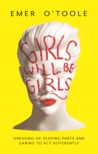
Girls Will be Girls: Dressing Up, Playing Parts and Daring to Act DifferentlyGirls Will be Girls: Dressing Up, Playing Parts and Daring to Act Differently by Emer O'Toole
My rating: 3 of 5 stars

O'Toole makes some very interesting, thought-provoking arguments about what it means to be a "girl" (basically, "feminine" - and "masculine" - traits are learnt behaviours that have nothing to do with actual biological sex). While I don't think I could bring myself to not conform to female gender norms by not shaving my armpits (as O'Toole has done), I am inspired to be more comfortable about not conforming to gender norms in other ways. For example, I've never been one for fashion or wearing lots of make-up - something that I've always felt a bit embarrassed about because I felt I was somehow failing to be a proper "girl". But according to O'Toole's argument, the traditional concept of a girl is just a social construct anyway and damaging for gender equality if it is rigidly adhered to. That's not to say she's against being a "girly girl" but more women need to be aware that it's a performance - and they can choose to perform in a different way should they wish to (O'Toole is much better explaining this than I am).

However, I did find her arguments a bit OTT at time and bordering on the preaching. She lost me completely when talking about sexual identity. I thought her argument that heterosexuality, homosexuality, bisexuality etc. are social constructs (just as "male" and "female" are social constructs") wasn't that convincing; she seems to be suggesting we're all "queer"(which, as far as I understand it, means fancying people because of the person they are; independent of their anatomy) and it's society that makes us think otherwise. We probably all are on a spectrum but it's down to the individual to decide where they fall on the spectrum. If someone only wants to have same-sex relationships or only opposite-sex relationships,* that's up to them (just as it's perfectly OK to identify as queer). It's a tad patronising to suggest that they are being 100% straight (for want of a better word) or 100% gay because of the binary society that they are in (again, O'Toole is much better explaining her arguments than I am).


I discovered this book through the Reads and Daydreams BookTube channel: https://www.youtube.com/channel/UC1aN...

* = I mean a relationship with someone who has a different gender identity from you - not necessarily a "boy/girl" relationship.

View all my reviews

Thursday, 14 July 2016

Why I give up on books

My worst reading habit is buying a book, reading the first few pages and then giving up on it. I've done this a lot over the years (there's at least 50 unread books on my Kindle), so I have by now managed to get some idea about what causes me to abandon a book. Not that it stops me from buying a book and subsequently adding it to the "failed to finish" pile, mind.

Anyway, these are (some of) the reasons I give up on a book.

1. Takes ages to get to the flipping point
I don't mind a slow burner, and actually avoid fast-paced thrillers, but I have no patience for a story that hasn't got any further (or even not as far) than the description on the dust jacket by a quarter of the way in. I mean you, Moby Dick. You're supposed to be an allegorical tale about hunting a whale but when I was at "25%", according to my Kindle, no-one had left dry land, Captain Ahab had just made the briefest of cameos, and the eponymous Moby was not even a blip on the horizon. 

2. Characters that don't act like normal human beings
I like weird and wonderful characters and have no problem with characters that have mental illnesses (so perhaps act in bizarre ways). What I hate is when a character doesn't act in a way that makes sense for them or their situation. I lost the will to live with To Rise Again At A Decent Hour by Joshua Ferris for several reasons but mainly because the main character, Paul, reacts in a really stupid way when he discovers that someone is faking his identity online (such as getting into petty arguments)  - ignoring the most obvious solutions to his dilemma (like contacting social media sites etc). OK it is as my mother used to say "just a story" but, urgh, THAT'S NOT HOW ANYONE - EVEN THE MOST CLUELESS PERSON ABOUT SOCIAL MEDIA - WOULD BEHAVE!

3. The characters are people I would actively avoid in real life
I couldn't bear Michael Faber's The Crimson Petal and The White because one of its main protagonists, William, is this arrogant, self-obsessed, tool of a man. Admittedly, he's supposed to be this way as Faber is showing (very successfully it has to be said) how "captains of industry" could be complete prize doofuses. Thing is I read to escape life, to escape the prize doofuses I come across in real life (I am speaking generally not about anyone in particular in case anyone gets paranoid); therefore, why would I actively choose to spent time with an idiot? The Crimson Petal and The White is a pretty large tome, so reading whole the book would be like sitting next to, and having to make chit chat to, Michael Gove (So Mikey, how does it feel to have banjaxed your career by being backstabbing toad?"), on a long haul flight.

4. It's pretentious
As someone who comes out in an allergic rash should I spend too much time in hipsterville areas like Shoreditch, any suggestion that a book is going to be pretentious sets my teeth on edge. Recently, I attempted to read Tom McCarthy's Satin Island for my book group. The Guardian, in a less than glowing review, describes it as being "packed with daring cerebral insights" and calls it "avant-garde" - which would normally be enough for me to say "nope" and move on. But, given it was a book group book, I persevered... until page 23 and then said nope after confirming that it was indeed incredibly pretentious. Too clever by half is "too clever" for me.

5. All doom and gloom
I don't need a happy ending (or even happy beginning or middle), but I do need hope when I am reading a book. Life, particularly given what's being going on at the moment, can be pretty depressing. Therefore, I have never understood the desire to read fiction books that are completely negative. Surely if you want to read something bleak, you should buy a newspaper? For this reason, I've given up on many dystopian novels - including Margaret Atword's celebrated novel, The Handmaid's Tale. That said, Kazuo Ishiguro is my favourite author and his books aren't exactly renown for their optimism, but I think his books are a better reflection of real life - a mix of both negative and positive (and we all have to muddle along the best we can).


Saturday, 9 July 2016

The Complete Maus


The Complete Maus (Maus, #1-2)The Complete Maus by Art Spiegelman
My rating: 5 of 5 stars

I don't think there's much I can say about this poignant book about the holocaust that's not already been said (given that the first part was first published 30 years ago).

What I will say is that I am very tempted to post a copy to Ken Livingstone though. For those who don't know, the former London mayor said (during an interview about whether or not a fellow Labour member's remarks about Israel were antisemitic): "Hitler won his election in 1932, his policy then was that Jews should be moved to Israel. He was supporting Zionism – this before he went mad and ended up killing six million Jews."

Anyone who reads this book will realise there's a massive difference between Hitler's views on Jewish people (Maus quotes him as saying "The Jews are undoubtedly a race but they are not human") and a belief in a Jewish nation. I have grave concerns about the actions of the Israeli government towards Palestinians, but that doesn't mean I think Israel doesn't have a right to exist or - much more importantly - that we can allow antisemitism in any form (or Islamophobia for that matter). The Holocaust happened because we allowed fear and hate to rule; we are all obligated to ensure that never happens again. This is particularly important given the UK's current political climate. "Brexiters" and "Remainers" must come together to stamp out racism. We must show the hateful that their views have no place in a modern society.

View all my reviews

Sunday, 3 July 2016

My favourite books of the year...so far

Apparently, Friday (1st July) was the halfway point for 2016  - and one can only hope that the second half of 2016 shapes up to be better than the first half. Mind you as the infamous article 50 has yet to be invoked and the US has yet to elect a new president (please God let them learn from the UK and resist the temptation to make a protest vote), there's no guarantee. Well, at least, let's hope the grim reaper is done with beloved celebrities for the time being - actually forget that as well given Caroline "So, what first attracted you to the millionaire Paul Daniels?" Aherne sadly died yesterday (2nd July).

Anyway, as I've been driving myself nuts (or rather, even more nuts) thinking about the consequences of flipping Brexit, I've decided to focus on something much more positive - books I've really loved this year. So, in chronological order (first to last) here are my six favourite books that I read in the first half of this year*. As I need to get my tea (dinner if not from the North/The Midlands) on, I am going to be lazy and just put a link to the relevant GoodReads review:

1. A Painful Gift: The Journal of a Soul with Autism by Chris Goodchild
Disclaimer: Chris is an elder at my Quaker meeting, so the review is probably biased because I was predisposed to like the book. But, that doesn't mean the book isn't worth reading. 

2.  A God in Ruins by Kate Atkinson
A "sequel" that's as good as the original

3. All My Friends are Superheroes by Andrew Kaufman
A totally random, bonkers book that I discovered through the 1book1review BookTube** channel.

4. The Long Way to a Small, Angry, Planet by Becky Chambers
You'd think a self-published Sci-Fi novel would be absolutely dire. It isn't. It really, really isn't. I cannot recommend this book highly enough.

5. Sally Heathcote: Suffragette by Mary M Talbot et al
Proof that graphic novels can be so much more than "comic books"

6. The House of the Spirits by Isabel Allende
Was enjoying it so much that I delayed finishing it just so I could savour it. Actually, as I've only just finished it today, I am reluctant to start reading something else because I doubt I would love it as much!

Honourable mention:
1. Reader, I married him by Tracy Chevalier (editor)
Although I gave it three stars*** (that means see note below; it's not me demonstrating what three stars look like), this book will always retain a special place in my heart because it was given to me by a friend - who even took the trouble to send it to my hotel when I was working at a conference.


* = Of 20 I've actually read. I am not just listing the books I've read!
** = A BookTube channel is basically a YouTube channel that focuses on books
*** = Three stars, according to GoodReads, means you "liked it" as opposed to four stars ("really liked it") or five stars ("it was amazing"), However, as I tend not to finish books that I rate two stars ("it was OK") or one star ("I did not like it"), three stars is the lowest rating I give.

For more of my GoodRead reviews, click here

The House of The Spirits by Isabel Allende


The House of the SpiritsThe House of the Spirits by Isabel Allende
My rating: 5 of 5 stars

A wonderful, engrossing tale of a family through three generations - from grandmother to granddaughter. Each character is complex, with none being truly evil or truly saintly. Even the fierce-tempered patriarch, Esteban Trueban, gains your sympathy by the end of the book (I won't spoil the book by saying why he's an unlikely candidate for sympathy...).

While the family are always the centrepiece of the story, The House of the Spirits also explores the devastating effects of a violent revolution on a country. What makes these passages all the more poignant is that Allende was probably writing from her own experience; she had to flee Chile after the president, her cousin, was deposed in Pinochet's CIA-backed coup. (actually the book, in general, is seen as at least semi-autobiographical.)

I am rubbish explaining why I love a book, so I will just say this - I feel like this book has changed my perspective of the world; I am not sure how, or if my perspective will stay changed, but it has. I do know that if at this moment, I was asked to compile a list of my favourite books of all time - this would be on it.

View all my reviews

Tuesday, 21 June 2016

Seven truths about reading

I've been dwelling on what I know to be "truths" about reading for a while - mainly when I can't sleep and am trying to think of something a tad more positive than "Oh my gawd. I am 36 and single! I am going to die and no one will discover my body for the next three years" (have flatmates so one hopes the smell at least would be prompt my discovery before three years). Moving on, this is what I've realised.

1.There will be occasions when you read, or attempt to read, a much lauded book and you will not have the foggiest why so many people like the thing. In fact - possibly because you have crippling low self-esteem and, thus, have a desperate need to justify your opinions - you spend a fair amount of time Googling said book to find the one crap review that agrees with you. Thank goodness for Goodreads - you can always rely on that site to find a bad review; undoubtedly, there's a Goodreads review somewhere saying "that Shakespeare bloke has a cloth ear for dialogue".

2. On a similar note, you will read a book that you absolutely love and you will be amazed to find no one else has heard of it, let alone wants to wax lyrical about it. Kirsty Logan's Gracekeepers and Lauren Owen's The Quick are two recent examples of books I've thought were wonderful but haven't seem to got that much attention (maybe I am just looking in the wrong places).

3. You will "discover" an author you think is fantastic and you want tell everyone - friends, family, your Twitter followers  (all, er, 300 of them) - to stop what they are doing and read the collected works of the author immediately. Then you realise as the author in question is Charles Dickens, people probably already have an inkling that he's not bad at storytelling.

4. You can judge a book by its cover - a whimsical picture of a woman,wearing a 40s dress with a headscarf, looking to the distance (for her long-lost love), is blatantly family saga type fair.

5, You will be plagued by a constant sense of guilt because of all the books you've bought and failed to read. This guilt is made worse when you have a Kindle. Despite "removing from device", the books stay in your "cloud" - so you are forever reminded that you genuinely thought a book about the history of the WI would be interesting despite the fact you, or no one you know, have never had anything to do with the WI. At least with "proper" books, you can give the damn things away to a charity shop and no longer have to see what you've failed to read.

6. You will never, however many times you try, get the hang of Russian literature - specifically, that each character has several names that are used interchangeably.

7. Inevitably, you will forget point six, and attempt to read Master and Margarita. Again. And Give Up At The Same Point That You Did Last Time. Note that this also true for Catch 22 (yes, I know it's not a Russian novel).

This was supposed to be 10 things but I ran out of stream and, frankly, want to watch another episode of iZombie before bed.

Sunday, 19 June 2016

Bel Canto - a stalled project


I am supposed to be reading Ann Patchett's Bel Canto for my book group but, to be honest,
I am struggling, The first issue is the plot - it follows the exploits of a group of people who are taken hostage at a party (held in an unnamed Latin American country) by rather hapless kidnappers. The kidnappers' intended target, the country's president, has stayed at home to watch his favourite soap opera, so they have make to do with the assorted members of the party (including a Japanese CEO and an opera singer).

I can get passed the somewhat ludicrous set up (i.e. that the president is at home watching telly) but given recent awful events, it's difficult to imagine a hostage situation being as (relatively) amicable as the one in the book is described. In fairness to Patchett, Bel Canto was written before 911 (it was published in 2001, so I'm guessing she wrote it around 2000 etc.) and subsequent events. Therefore, she would have written it at a time when people storming into a building with guns (while still fairly terrifying) wasn't synonymous with the horrific carnage that it is today. But, it's hard to read about a situation you know would play out very differently in real life.

Apparently, the book was inspired by the 1996 Japanese embassy hostage crisis, which brings me to second issue I have with this book. I am not sure it's Patchett's place to write about it. As far as I can tell (or as far as Wikipedia can tell me), Patchett hasn't lived in Latin America at any point (and going by her picture, doesn't have any Latin American heritage). Therefore, I do wonder whether her lack of direct experience means she's poorly qualified to write about Latin America politics - even if she is doing it in a light hearted way.

I am questioning it because I have done a complete about turn on the book Me Before You. When I read it, I liked it and thought it was your above average romance. But the recent furore over the film adaptation (including the criticism that it suggests your life is not worth living if you're disabled) has made me question whether authors should write about things that they do not have direct experience of. Had a disabled author, rather than the able-bodied JoJo Moyles, written Me Before You, they may have still been criticised but at least they would have been less likely to be accused of "ableism".

Obviously, authors can't always have direct experience  - I wouldn't suggest that Patchett would need to live through a hostage situation, for example, before she was able to write Bel Canto. But, sometimes I think we need to question if the story we're reading is that author's story to tell,

My third issue, and perhaps the most important, is that it's fairly slow going. If -  as the book jacket claims - it was a novel "you simply can't put down", I'd probable care less about issues one and two (or rather not dwell on them as much).  I am halfway in and not much has happened that couldn't have been covered in the first quarter. According to some reviews I've seen, it picks up as you go further in but I don't think I am interested enough to continue. Also, I am not that invested in the characters - the male hostages seem interchangeable despite being nominally very different (ranging from a priest to a Japanese CEO) and the main female character is a bit of a stereotype.

She's an opera singer (hence title of book) with an exquisite voice who seems to charm and enchant her fellow hostages and kidnappers alike. Urgh, seriously? I would expect a male author to come up with the tired old trope of a woman with the power to charm all and sundry but a female author? Maybe I have lived a sheltered life, but I have never encountered a woman that men fall helplessly in love in with. From what I've read from the reviews, her power over men is fairly central to the plot as time goes on - but wouldn't it be a nice to have a normal looking woman with average powers of attraction. If men are allowed to be average joes in fiction, why can't women be?